
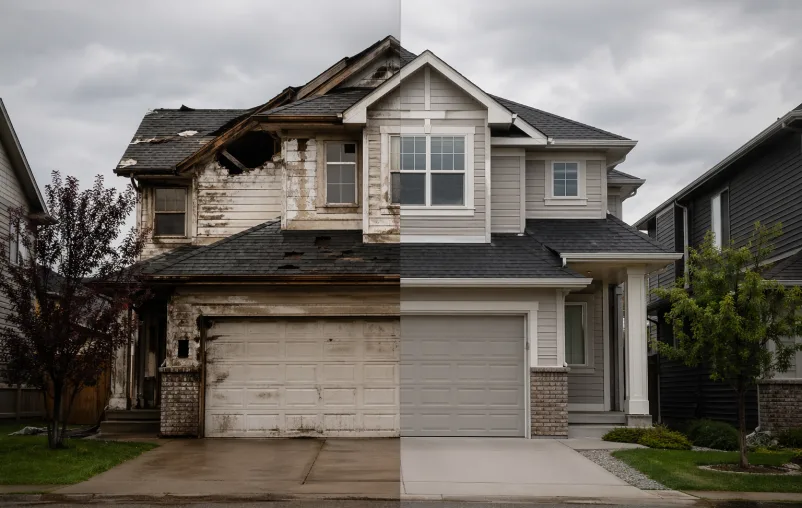
When a home suffers damage — whether from a storm, flood, fire, or structural failure — the clock starts ticking immediately. Alba Construction has seen firsthand how the decisions made in the first days and weeks after damage occurs determine whether a home fully recovers or carries hidden problems for years. Home damage restoration is not simply about patching what broke. Homeowners need to understand why damage spreads, what gets missed, and how the wrong approach permanently compromises a structure.
Why Damage Rarely Stays in One Place
Most homeowners think of damage as contained. A broken roof means a broken roof. A cracked wall means a cracked wall. But damage rarely stays that simple. Water from a roof leak travels along joists and insulation before it ever appears on a ceiling. Wind damage along exterior siding creates gaps that allow moisture to enter wall cavities over months. Structural movement in one part of a home creates stress in framing, drywall, and finishes in areas that seem completely unrelated.
This is why some homes never fully recover. Crews fix the visible damage. Nobody addresses what is hiding behind the walls.
The Role of Speed in Home Damage Restoration
Speed is one of the most critical factors in home damage restoration. Wet materials grow mold faster than most homeowners expect. A compromised roof left exposed allows water to infiltrate insulation and framing with every rainfall. Cracks in exterior siding left unaddressed give moisture a direct path to the structure beneath.
Many homeowners delay repairs for understandable reasons — insurance paperwork, contractor availability, budget concerns. But every week of delay adds layers of secondary damage that make the original repair more expensive and more complex. Handling a roof repair in Calgary quickly protects everything beneath it. Delaying that same repair by two months may require replacing insulation, reframing sections of the attic, and addressing mold remediation before a single shingle goes on.
What Gets Missed During Repairs
Incomplete repairs are one of the main reasons homes carry long-term damage. A crew fixes the obvious break but never traces the damage to its origin. The patch holds for a season, then fails again — sometimes worse than the first time.
Common areas that crews miss include:
Wall cavities behind damaged siding that absorbed moisture before the exterior was replaced. Seams and joints in drywall that water or impact stressed but nobody re-taped and mudded properly. Roof deck sections that water infiltration softened but crews did not replace during a surface-level repair. Foundational settling shifts framing slightly, causing cracks to reappear in walls and ceilings within months.
Each missed area creates a vulnerability. Over time, these vulnerabilities compound. The home looks repaired but structurally it is not.
How Poor Repairs Create Long-Term Problems
There is a difference between covering damage and correcting it. A skim coat of mud over a stress crack in drywall will crack again. Painting over moisture-stained walls without fixing the moisture source causes bubbling and mold within a season. Replacing only the visible sections of damaged siding without inspecting the wrap and sheathing beneath leaves the wall system incomplete.
Professional restoration work requires tracing every consequence of the original damage event. Contractors must look inside wall cavities. Moisture readings in framing and subfloor materials need checking too. Any material that is compromised — not just visibly damaged on the surface — must be replaced. A repair that skips these steps will fail.
Why Material Quality and Installation Matter
Even when contractors correctly identify the full scope of damage, the quality of materials and workmanship determines how well the repair holds. Low-quality siding installed without proper flashing allows water infiltration at every seam. Drywall without adequate fasteners or tape develops movement cracks under normal settling. Roofing installed without proper underlayment allows ice damming and water ingress in Calgary’s winter conditions.
Homeowners must treat quality materials and skilled installation as non-negotiable in home damage restoration. That choice separates a repair that lasts twenty years from one that starts showing problems in two.
What Homeowners Can Do
Homeowners are not helpless in this process. Act quickly — do not wait for a full insurance settlement before beginning emergency stabilization and assessment. Document everything before cleanup begins. Ask contractors specific questions about what they are inspecting, not just what they are replacing. Request a written scope of work that explains every element of the repair and why it belongs there.
Working with contractors who carry direct experience in damage repair makes a significant difference. General renovation skills do not translate automatically to damage repair. Tracing how damage has traveled and identifying its true source requires a specific kind of expertise. Alba Construction approaches every project with this methodology, ensuring repairs address the full scope of what the damage event actually caused.
Closing: Home Damage Restoration Done Right
Homes that never fully recover after damage almost always share the same story. Either the repairs came too late, the scope fell short, the workmanship failed, or all three combined. Home damage restoration done correctly stops that pattern before it starts.
Alba Construction works across Calgary helping homeowners and property managers identify the full extent of damage and execute repairs that hold. Whether the issue involves roofing, siding, drywall, or broader structural restoration, the process stays the same — find everything the damage touched, fix it correctly, and build it to last.
Visit albaconstructioninc.ca to learn more about how the team approaches damage repair and restoration in Calgary.
FAQs
1. What is home damage restoration and what does it typically include? Home damage restoration is the process of repairing a property after storms, floods, fire, or structural failure cause damage. It typically includes emergency stabilization, full damage assessment, material removal and replacement, and finishing work such as drywall, roofing, and siding repairs.
2. How quickly should I act after my home is damaged? Act as quickly as possible. Every day of delay allows secondary damage to develop — moisture spreads, mold grows, and compromised structures weaken further. Begin emergency stabilization and a professional inspection immediately, even before the insurance settlement arrives.
3. Why do some repairs fail within a year or two? Most short-term repair failures happen because the contractor never fully traced the original damage. They fix visible damage without identifying where moisture traveled or where structural stress transferred. The underlying problem remains and eventually reappears.
4. How do I know if my home was properly repaired after storm damage? Ask your contractor for a written scope of work that details every item repaired and why. A proper repair includes moisture readings, inspection of wall cavities and framing, and documentation of all replaced materials. If the scope only addresses visible surface damage, it is likely incomplete.
5. Does Alba Construction handle both interior and exterior damage repairs? Yes. Alba Construction handles a full range of repair and restoration services including roofing, siding, drywall taping and mudding, and broader structural restoration work throughout Calgary.