

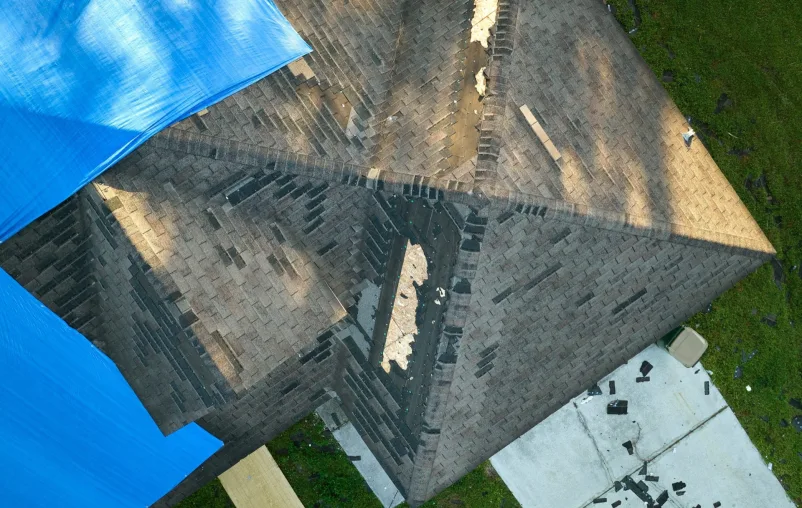
Alberta summers bring some of the most intense hailstorms in Canada. Calgary homeowners know this well. However, many people walk outside after a storm, see no obvious holes, and assume their home escaped damage. That assumption costs thousands of dollars in future repairs.
Hail damage is almost never what it looks like on the surface. Furthermore, the most destructive effects often stay hidden for months — even years — before showing up as leaks, rot, or crumbling walls.
What Hail Does to Asphalt Shingles
Every hailstone that strikes your roof hits with focused force. Specifically, it knocks granules loose from the surface of asphalt shingles. Those granules are not decorative — they protect the asphalt layer underneath from UV exposure.
Once granules disappear, the asphalt dries out and cracks. Consequently, your shingles age years faster than they should. A roof that should last 20 years may fail in 10 after a serious hailstorm. Moreover, most homeowners never notice this process until water starts entering the home.
Look for dark, bare patches on your shingles after a storm. Also, check your gutters and downspouts. If you find piles of granules collecting there, your roof needs professional assessment. The Calgary hail damage repair specialists at Alba Construction inspect roofs thoroughly and identify damage that’s invisible from ground level.
What Hail Does to Your Siding
Siding takes a different kind of beating. Vinyl siding often shows visible dents, cracks, or chips. However, wood siding can absorb the impact and show no outward signs for weeks. Fiber cement siding may crack internally without the surface breaking.
In each case, the real problem starts when water enters through those micro-cracks. Furthermore, moisture behind your siding creates the perfect environment for mold, rot, and wood decay. Over one or two summers, that hidden moisture destroys the structural layer underneath your exterior finish.
Specifically, the areas around windows, doors, and corners take the hardest hits during hailstorms. These spots already collect water naturally, so even small cracks speed up the damage. Contacting professional siding repair experts quickly after a storm stops that damage from spreading further.
The Hidden Timeline of Hail Damage
Most homeowners think damage either happens or it doesn’t. In reality, hail sets off a slow chain reaction. Therefore, it helps to understand what that timeline looks like.
In the first few weeks, granule loss begins and micro-cracks form. By the end of the first summer, UV exposure starts degrading any exposed asphalt or wood layers. By year two, moisture penetrates deeper. Furthermore, by year three, you may find rot in roof decking, mold in wall cavities, or failed insulation behind your siding.
That three-year progression is preventable. Acting within 30 to 60 days of a hailstorm dramatically changes the outcome. In addition, most home insurance policies require you to file claims within a specific window — so waiting too long can remove your financial protection entirely.
Damage You Might Not Think to Check
Homeowners focus on roofs and siding, which makes sense. However, hail also damages gutters, fascia boards, skylights, and exterior paint. Dented gutters channel water incorrectly, causing overflow that erodes your foundation. Damaged fascia allows water into your roof’s edge boards.
Additionally, hail strips the top coat of exterior paint, making the surface beneath vulnerable to moisture. If your home needed repainting soon, now is the time to act. Alba Construction provides exterior painting services that protect exposed surfaces and restore your home’s weather resistance at the same time.
When Older Homes Face Hail Damage
Homes built before 1990 carry a specific concern during any renovation or repair process. Specifically, many of these homes contain asbestos in wall materials, insulation, and roofing products. When hail damages older exterior materials, those fibres can become disturbed.
Therefore, any repair work on a pre-1990 home should involve a material assessment first. Attempting to repair or replace damaged materials without testing exposes workers and family members to serious health risks. Alba Construction’s asbestos abatement services handle this safely and legally before any repair work begins.
What to Do Right After a Storm
First, document everything with photos — roof, siding, gutters, and windows. Do this the same day, if possible. Second, do not attempt to walk your roof yourself. The surface may be compromised and unsafe to walk on. Third, contact a professional for a full inspection.
Additionally, check your interior ceilings for water stains or soft spots after the storm. These signs often indicate roof penetration that began during the storm itself. If you notice bubbling drywall or stained ceiling areas, book an inspection immediately.
For homes where ceiling or wall damage occurred, drywall taping and mudding restores interior surfaces cleanly after water intrusion repairs are complete.
Getting the Right Repair Done Once
The worst outcome after hail is paying for repairs twice. Specifically, this happens when homeowners patch only what they can see and miss what they can’t. Alba Construction takes a whole-home approach after every hailstorm assessment. Our team identifies every compromised surface, checks the interior for signs of penetration, and completes repairs that hold for years.
Do not let this summer’s hailstorms become next year’s emergency. Reach out to Alba Construction for a full inspection today.
Frequently Asked Questions
How long after a hailstorm should I get my roof inspected? Get an inspection within 30 to 60 days. Most insurance policies have claim deadlines, so acting quickly protects both your home and your coverage.
Can hail damage my roof even if the hailstones were small? Yes. Even small hailstones strip granules from asphalt shingles and cause micro-cracks in siding. The damage is often invisible from the ground but significant under the surface.
Does homeowner’s insurance in Alberta typically cover hail damage? Most standard home insurance policies in Alberta cover hail damage to roofs and siding. However, you must file within your policy’s reporting window. Document damage the same day and contact your insurer promptly.
How do I know if my siding was damaged and not just dirty? Look for dents, cracks, or areas where the finish looks chalky or worn. Run your hand along siding panels — damaged areas often feel rough or uneven. A professional inspection gives you a definitive answer.
Is hail damage only a cosmetic problem? No. Hail damage compromises the weatherproofing of your home. Left unrepaired, it leads to water intrusion, mold, structural rot, and much higher repair costs within one to three years.